Understanding ADHD Beyond the Diagnosis
For many children, teens, and adults, the journey to an ADHD diagnosis begins with frustration. A child may struggle to stay focused in school despite trying their best. A teenager may feel overwhelmed by academic demands and constantly falling behind. An adult may wonder why organization, time management, and concentration seem more difficult for them than for others.
At Compassionate Psychiatric Services (CPS), we understand that ADHD is more than occasional distraction. It is a neurodevelopmental condition that can affect learning, work performance, relationships, emotional well-being, and self-confidence.
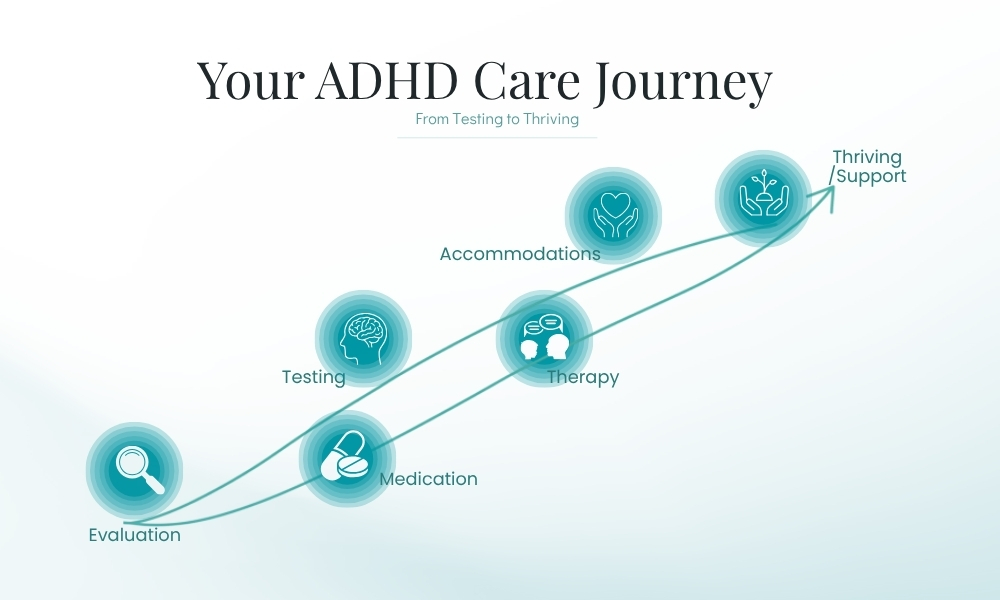
The good news is that ADHD is highly treatable. With the right evaluation, evidence-based treatment plan, and ongoing support, individuals of all ages can learn to manage symptoms and thrive. Our goal is to help each patient build a pathway toward long-term success.
Getting Started: Easy Access to ADHD Care at CPS
Seeking help should not feel complicated. At CPS, we’ve designed our process to make getting started as simple and accessible as possible. We accept more than 60 insurance plans, including Tricare and VA benefits, and offer convenient telehealth appointments as well as in-person care at four North Texas locations: Frisco, Southlake, Plano, and our Frisco Therapy Center.
Whether you’re seeking answers for your child, your teenager, or yourself, our team provides comprehensive ADHD care under one roof. Patients can access psychiatric evaluations, therapy, medication management, advanced diagnostic testing, and ongoing support without having to coordinate care between multiple providers.
This integrated approach allows our team to develop a complete understanding of each patient’s needs while creating a seamless treatment experience.
What to Expect: Your Comprehensive ADHD Evaluation
Every ADHD journey begins with a thorough psychiatric evaluation.
ADHD symptoms can overlap with other conditions, including anxiety, depression, trauma-related disorders, learning differences, sleep disorders, and stress-related concerns. That’s why our providers take time to understand the full picture before making recommendations.
During the evaluation, we discuss:
- Current symptoms and challenges
- Academic or workplace performance
- Medical and mental health history
- Family history
- Developmental background
- Social and emotional functioning
- Previous treatments or interventions
This comprehensive assessment helps ensure that treatment addresses the true causes of a patient’s difficulties rather than focusing solely on symptoms.
The Role of TOVA Testing in ADHD Diagnosis
One of the tools CPS may use during the ADHD evaluation process is the Test of Variables of Attention (TOVA), an objective computerized assessment that measures attention, impulsivity, and response control.
While TOVA testing is not used in isolation, it can provide valuable information alongside a clinical evaluation.
Does TOVA Testing Usually Change Diagnosis?
In most cases, TOVA results confirm what clinicians have already identified during the evaluation process. It is relatively uncommon for TOVA testing to completely change an ADHD diagnosis.
However, the value of objective testing extends beyond diagnosis alone. Many patients and families report feeling reassured and validated when the results support the clinical findings. The testing can help answer lingering questions and increase confidence in the treatment plan.
When TOVA results do not support an ADHD diagnosis, they can also help patients and families better understand alternative explanations for attention difficulties and feel more comfortable exploring treatment approaches that may not involve ADHD medication.
At CPS, we believe objective testing helps create clarity, confidence, and collaboration between patients, families, and providers.
ADHD Treatment at Every Age: Children, Teens, and Adults
Although ADHD can occur across the lifespan, treatment is never one-size-fits-all.
The factors affecting attention and focus often differ significantly depending on a person’s age, responsibilities, environment, and overall mental health.
ADHD Treatment for Children
For children, ADHD symptoms often become most noticeable in the classroom.
Children are expected to sit still, follow instructions, complete assignments, and manage transitions throughout the school day. Difficulties with attention, impulsivity, or hyperactivity can significantly impact learning and self-esteem.
Treatment for children may include:
- Parent education and support
- Behavioral interventions
- Therapy focused on coping skills
- School collaboration
- Medication management when appropriate
- Academic accommodation recommendations
Our providers work closely with families to identify strengths while helping children develop the skills needed for success at home and school.
ADHD Treatment for Teens
Adolescence introduces new challenges, including increased academic demands, social pressures, extracurricular activities, and preparation for adulthood.
Teen treatment plans often focus on:
- Executive functioning skills
- Time management
- Organization strategies
- Emotional regulation
- Academic performance
- Self-advocacy
As teens mature, CPS encourages active participation in treatment decisions, helping them build confidence and independence while preparing for future success.
ADHD Treatment for Adults
Many adults receive an ADHD diagnosis later in life after years of wondering why certain tasks feel more difficult than they seem to be for others.
Adult ADHD frequently intersects with other mental health concerns, including anxiety, depression, trauma, PTSD, burnout, and chronic stress.
How Does ADHD Treatment Differ for a 35-Year-Old Compared to a 9-Year-Old?
The answer lies in understanding each individual’s environment and life circumstances.
A child may struggle primarily with classroom expectations and developing foundational coping skills. An adult may face challenges related to workplace responsibilities, relationships, parenting, or co-occurring conditions such as depression or PTSD.
These differences influence every aspect of treatment, including therapy approaches, behavioral strategies, and medication selection. At CPS, we tailor recommendations to the unique needs of each patient rather than relying on a standard treatment formula.
Smarter Medication Management with Pharmacogenomic Testing
Finding the right ADHD medication can sometimes involve trial and error. CPS uses advanced pharmacogenomic testing when appropriate to reduce uncertainty and support more personalized treatment decisions.
Pharmacogenomic testing analyzes specific genetic factors that may influence how an individual metabolizes and responds to medications.
How Does CPS Use Genetic Testing When Choosing ADHD Medication?
Once a medication class has been identified as appropriate, our providers review the patient’s pharmacogenomic results to select options that may have a higher likelihood of being both effective and well-tolerated.
If testing suggests that certain medications may work better than others, those findings become part of the decision-making process. When treatment options are limited, providers discuss all available choices openly with patients, including medications that may be less likely to produce optimal results based on genetic findings.
This collaborative conversation helps strengthen the clinician-patient relationship while empowering patients to make informed decisions about their care.
Rather than relying solely on guesswork, pharmacogenomic testing allows us to personalize treatment in a way that reflects our commitment to compassionate, evidence-based care.
Therapy and Skill Building: Success Beyond Medication
Medication can be an important part of ADHD treatment, but it is rarely the entire solution. Therapy helps patients develop practical skills that improve daily functioning and quality of life.
Depending on age and individual needs, therapy may focus on:
- Organization and planning
- Emotional regulation
- Stress management
- Executive functioning skills
- Communication strategies
- Relationship improvement
- Academic success
- Workplace performance
Because CPS offers therapy and psychiatry within the same practice, providers can collaborate closely to ensure treatment goals remain aligned and effective.
School and Workplace Accommodations for ADHD
For many individuals with ADHD, accommodations can significantly improve success in educational and professional settings. Our providers can assist with documentation and recommendations when appropriate.
Support for Students: 504 Plans and IEP Guidance
Children and teens with ADHD may qualify for accommodations through a 504 Plan or an Individualized Education Program (IEP).
These supports may include:
- Extended testing time
- Reduced-distraction environments
- Organizational assistance
- Modified assignments
- Classroom accommodations
Our team can provide documentation and collaborate with families as they navigate the process.
Support for Adults: Workplace Accommodations Under the ADA
Adults with ADHD may benefit from workplace accommodations protected under the Americans with Disabilities Act (ADA).
Examples may include:
- Flexible scheduling
- Modified workspaces
- Written instructions
- Organizational support
- Technology-based productivity tools
CPS providers can help patients understand available options and provide supporting documentation when clinically appropriate.
Long-Term ADHD Management: A Partnership for Life
ADHD management is not a one-time event. Symptoms, responsibilities, and life circumstances evolve over time. Children become teenagers. Teenagers become adults. Career demands change. Family responsibilities grow.
That’s why CPS focuses on building long-term therapeutic relationships rooted in trust, communication, and personalized care.
Regular follow-up appointments allow providers to:
- Monitor symptom improvement
- Adjust treatment plans
- Evaluate medication effectiveness
- Address new challenges
- Celebrate progress and milestones
Our commitment is to support patients throughout every stage of life—not just during the diagnostic process.
The Compassionate Difference
Families across North Texas choose CPS because experienced, compassionate care should also be convenient care. With locations in Frisco, Southlake, Plano, and our Frisco Therapy Center, telehealth appointments available statewide, and evening and Saturday hours, we’ve built our practice around the reality of busy lives so that getting the right help doesn’t require putting everything else on hold.
Take the Next Step Toward Clarity and Confidence
ADHD can affect every aspect of life, but the right diagnosis and support can make a meaningful difference. Contact Compassionate Psychiatric Services today to schedule a comprehensive ADHD evaluation and begin a treatment plan tailored to your unique needs and goals.